“People learn from mistakes.”
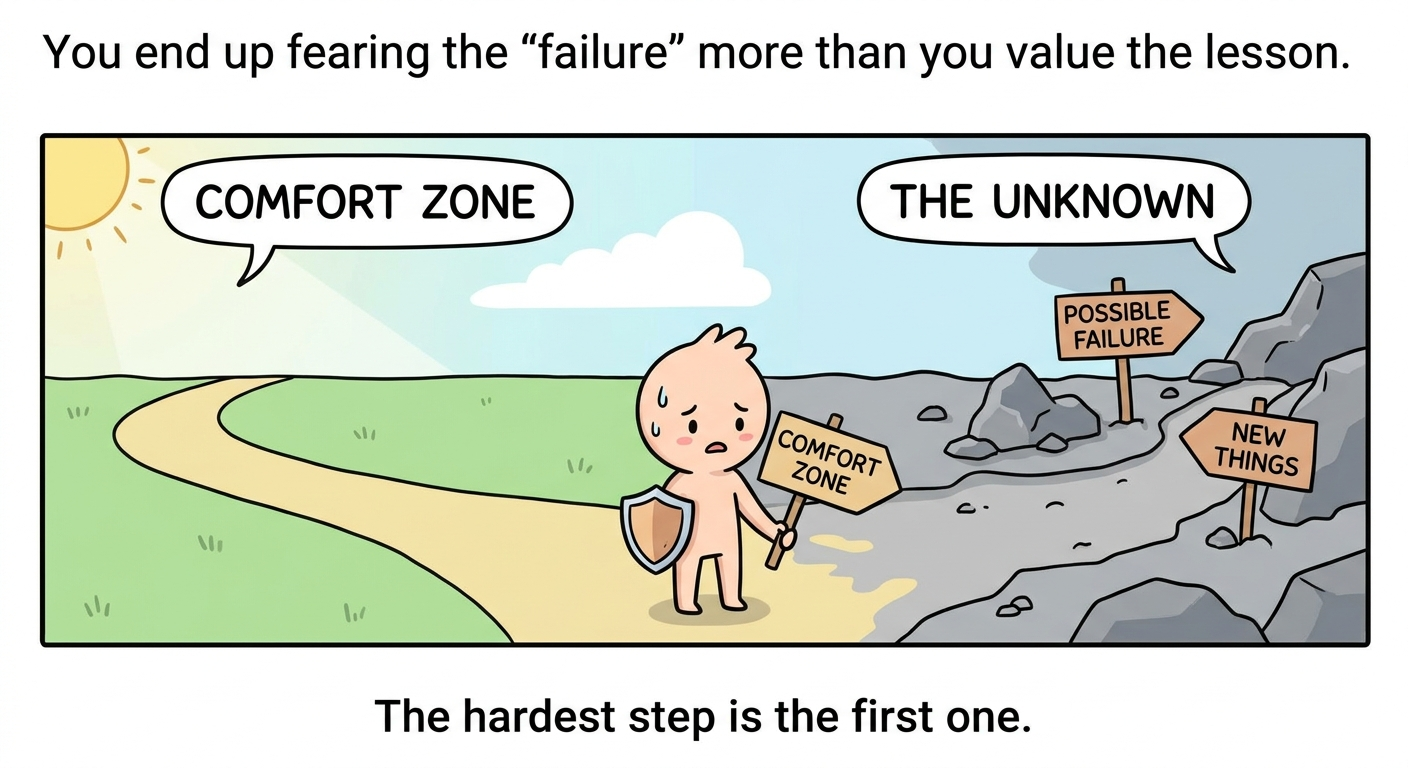
We hear that all the time, but it is not always true. Real learning requires a mix of experience and courage. If you are afraid of failing, it is natural to feel awkward about trying new things. You end up fearing the “failure” more than you value the lesson gained throughout the process.
Let’s look at this mathematically.
Imagine you try ten different ways to solve a problem. You only need one of them to work!
Does that make the other nine irrelevant? Not at all. Those nine attempts give you the data and experience that steer you toward the one successful solution. Without them, you would never reach the finish line! Just look at James Dyson, who famously built 5,126 failed prototypes before finding the one vacuum design that finally worked.
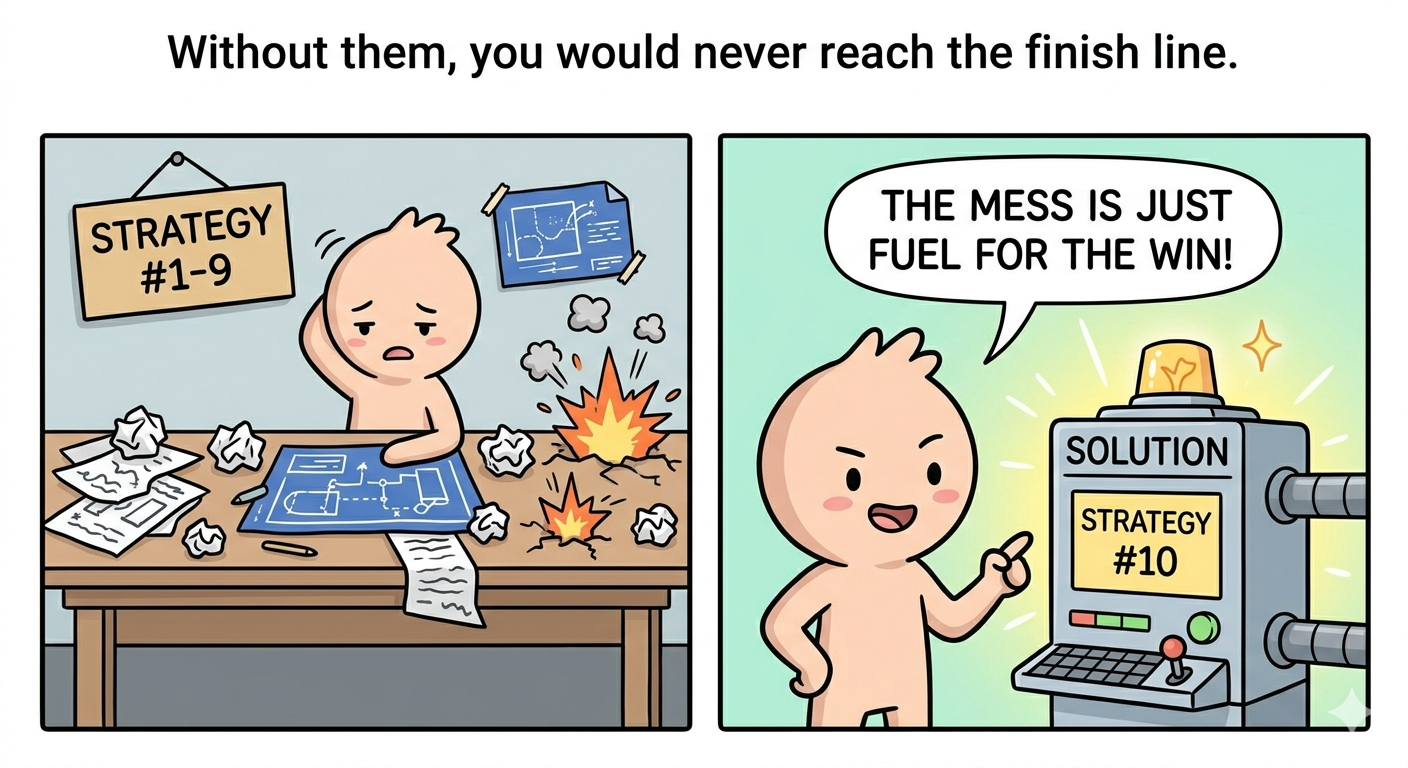
Unfortunately, most people only try three or four times. They are so hyper-focused on winning that they miss the crucial clues hidden in their failed attempts. There is even a sadder reality; many others never even take the first step. They give up before they even begin…
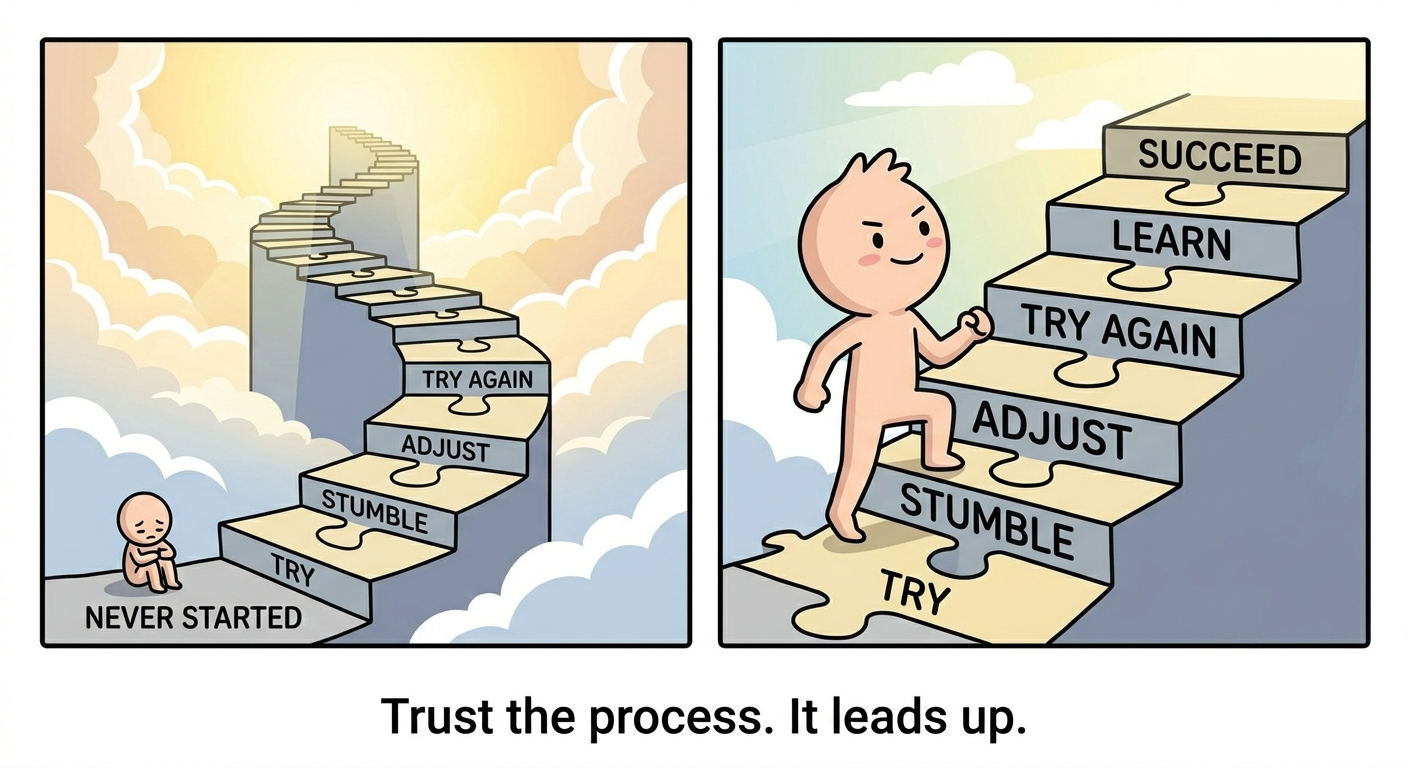
Learning is an iterative process. It does not happen overnight. You cannot skip the steps; you have to follow the process to get the result.
Stories Worth Watching
If you need a reminder that failure is just data collection, check out these real-life examples:
- The Super Mario Effect: Former NASA engineer Mark Rober explains how reframing failure like a video game (where you just try again without penalty) dramatically increases your success rate.
- SpaceX's Rocket Landing Bloopers: A spectacular, multi-million dollar blooper reel of exploding rockets, proving that even the most advanced engineering requires dozens of spectacular failures to get it right.
- James Dyson's 5,126 Failures: Before creating the revolutionary Dyson vacuum, James Dyson spent years building exactly 5,126 failed prototypes. Prototype 5,127 was the one that changed the world. :)